
Bibhu Prasad Routray explains why the US is supporting Japan's resolve to release 'treated' radioactive waste water into the Pacific Ocean. And what role China plays in the US decision.
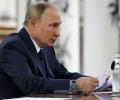
Putin said the purpose of the West is to weaken, divide and ultimately destroy Russia.

The two PMs may also explore ways to further deepen ties between the navies of the two countries to check China's heightened activities in the Indian Ocean.

'India's real concern is that cash-strapped Pakistan is keeping its military hardware well oiled on American money,' says Rajeev Sharma.

Leaders of the United States, India, Australia and Japan did discuss the 'challenge' posed by China during the first meeting of the Quad, and they made clear that none of them have any 'illusions' about Beijing, US National Security Advisor Jake Sullivan has said.

'With Trump, the relationship was very transactional, whereas with President Biden it is very structured.'

The SCO is increasingly seen as a counterweight to NATO and its membership will help India have a greater say in issues relating to security and defence besides combating terrorism.

The MEA said Singh's visit to Pyongyang was at the invitation of North Korean government.
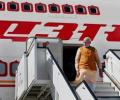
Prime Minister Narendra Modi will embark on a four-day trip to Japan from August 31 to bolster bilateral ties in key areas of civil nuclear cooperation, security, defence and trade.

Beijing will be intently watching Washington's response for any hint of weakness. Xi Jinping, who feels China has a limited window of strategic opportunity, will be emboldened to take additional initiatives in the Indo-Pacific and specifically against India and Taiwan, warns Jayadeva Ranade, the former senior RA&W officer and China expert.

Prime Minister Narendra Modi has favoured broadening of the strategic partnership with Russia in nuclear, defence and energy sectors and invited President Vladimir Putin to visit Kudankulam atomic power project during his trip in December for his annual summit.
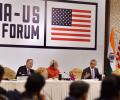
The leaders said trade ties were still fragile

After his wide-ranging talks with Modi on the second and final day of his India visit, Johnson said the new defence and security partnership will enable India to strengthen its domestic defence industry as well as help the two countries protect vital shared interests in the Indo-Pacific.

'The coming two months could unfold unpredictable results or unpredictable consequences or both at the same time,' says Rajaram Panda.

The announcement comes days after Trump and his Russian counterpart held their maiden summit in Helsinki on Monday.

We have already suffered considerable collateral damage as a result of the war, and its continuance will continue to dampen our prospects for faster economic growth. We have a direct and legitimate interest in its early cessation, counsels former foreign secretary Shyam Saran.

US President Barack Obama has said terrorist organisations like Al Qaeda are aiming at laying their hands on nuclear weapons, which would be catastrophic for the world.

'This was Indian land the PLA advanced on and occupied.' 'The Chinese then 'negotiated' a pullback of their troops a small distance on Indian territory even as Indian jawans draw back further into India from the forward position.' 'An apparently satisfied Indian government says this is a great move for peace! How great is that for China!'
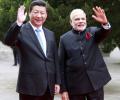
China's Vice Foreign Minister Li Baodong again harped on the need to build consensus over the admission of new members in the 48-member Nuclear Suppliers Group.
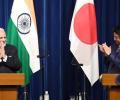
During the 13th annual summit, the two prime ministers reviewed developments in bilateral relations and explored new areas of cooperation, focusing on shared vision for peace and prosperity in the Indo-Pacific, where China is flexing its muscles.

He also said it was for India to decide on dates for Foreign Secretary-level talks, postponed in the wake of the terror strike.
Prime Minister Manmohan Singh arrived in Tokyo on the first leg of his three-nation visit, during which he would hold talks with his Japanese counterpart Naoto Kan on a range of issues, including civil nuclear energy cooperation.

'The MEA, hopefully, made it clear that the Indian PM can't be seen in Xi Jinping's company when China has, for all intents and purposes, annexed over 1,000 sq kms of Indian territory in eastern Ladakh, and essentially that the Wuhan spirit and the Mamallapuram spirit have turned into vinegar.'
China has assured Pakistan that it will support the latter during the forthcoming nuclear summit in Washington on all issues, including Islamabad's long standing demand for a civil nuclear agreement with the United States.According to sources privy to a special meeting of the parliamentary committee on national security, which was presided over by Prime Minister Yousuf Raza Gilani, Beijing has assured of all help during Gilani's upcoming US visit.

It is said that Vajpayee, who was also fluent in English, was the force behind uplifting Hindi to the international platform by using the language at the UN each time he delivered a speech.
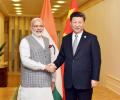
The meeting, which lasted for nearly 50-minutes, comes in the backdrop of stiff Chinese opposition to India's entry into the NSG, which looks after critical issues relating to nuclear sector, including trade and export of nuclear technology.

The Korean summit, laden with symbolism in everything from the choice of location to the mango mousse for dessert, could just be the first round in a continuing dialogue, says Dr Rajaram Panda.
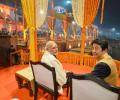
'Modi and Abe are working seriously for India-Japan bonhomie to grow stronger.' 'It is a win-win situation for both countries and the future look promising,' says Rajaram Panda, the Indian Council for Cultural Relations India Chair Visiting Professor at Reitaku University, Japan.
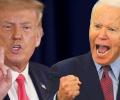
Irrespective of the outcome of Tuesday's keenly-contested US presidential election, America's strategic relationship with India is expected to maintain the current momentum and strengthen further, policy documents and remarks from the two campaigns indicate.

"Welcome to India, President @EmmanuelMacron! Your visit will add great strength to the strategic partnership between India and France. I look forward to our talks tomorrow," Modi tweeted after receiving Macron at the airport.
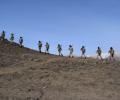
On May 5, around 250 Indian and Chinese army personnel clashed with iron rods, sticks, and even resorted to stone-pelting in Pangong Tso lake area in Eastern Ladakh.

Rajaram Panda explains why the US president needs to restrain himself and build a relationship with China to put any credible pressure on North Korea.

Japan's Mima Ito took the bronze medal after beating Han Ying of Germany in straight games.

The strategic pacts were inked after the summit between Prime Minister Narendra Modi and his Japanese counterpart Shinzo Abe during which they also discussed international and regional issues of mutual importance including UN security reforms.

'This is the first time the US has formally recognised the threat India faces from terrorist organisations based in Pakistan.'

Moving ahead with their new mantra -- Chalein Saath Saath: Forward Together We Go -- Prime Minister Narendra Modi and United States President Barack Obama on Tuesday vowed to deepen cooperation in every sector for the benefit of global stability and people's livelihoods over the next ten years.

Prime Minister Narendra Modi has met his Australian counterpart Scott Morrison in Washington, DC, ahead of the first in-person Quad meeting to be hosted by US President Joe Biden and discussed a broad range of issues of bilateral, regional and global importance, including the Indo-Pacific.
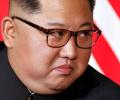
The visit, Kim's third since March, is taking place amid sharp escalation rhetoric between Beijing and Washington over tariffs almost spiralling into a trade war.
India and Australia on Wednesday decided to launch negotiations for civil nuclear pact during the talks between Prime Minister Manmohan Singh and his Australian counterpart Julia Gillard.

Prime Minister Narendra Modi's visit to South Korea is considered essential in strengthening defence ties, enhancing economic cooperation and forging cultural ties between the two countries, says Dr Rahul Mishra
